How to Engage Reluctant Readers in School
19 Mar, 2026






In this blog, you will learn:
Lunchtime should give every child a chance to relax, connect with friends and recharge before heading back to class. Yet for many students, the lead-up to lunch and lunchtime itself can trigger hyperactive behaviour and overstimulation.
Hyperactivity can make it harder for children to settle into afternoon learning and make classroom management more challenging for Teachers. To help students return to the classroom refreshed and ready to learn, it’s important for Teachers to consider how the time before, during and after lunch is structured.
In this blog, we explore practical ways Teachers can support students with hyperactivity to help regulate their energy, improve focus and create a more enjoyable lunchtime.
Hyperactivity is a state of increased energy, restlessness and difficulty controlling impulses. It is often linked to neurodevelopmental conditions like ADHD and can cause challenges with concentration and impulsivity.
In the classroom, hyperactivity often manifests through constant movement, excessive talking and fidgeting, which can impact students' academic performance and social interactions.
Children with SEND and Social, Emotional and Mental Health (SEMH) needs are particularly vulnerable. They can become overstimulated and find it harder to manage their energy and behaviour, especially during transitions like lunchtime.
Hyperactivity is often driven by the anticipation of a break, hunger or a need for sensory input before a transition. Managing lunchtime hyperactivity begins with preparing children in advance and following a consistent, predictable routine.
In the lead-up to lunchtime, children can become hyperactive and lose their ability to focus on learning. For some children with additional needs such as autism or ADHD, the thought of an unstructured lunch period can be daunting and overwhelming.
Structured transitions such as visual cues, timers or a simple verbal countdown before lunch can give students time to mentally prepare for the transition to lunchtime.
Teachers can boost engagement and calm students before lunch by adding a few heavy-work activities into their lesson. For example, activities such as stacking chairs, moving books or cleaning whiteboards can help hyperactive children release energy in a positive and productive way.
Students can also be encouraged to jump, play with fidget toys and use a weighted lap pad or shoulder wrap to manage their energy before lunch.
Teachers can manage hyperactivity during lunchtime by:
The playground at lunchtime can feel overwhelming, especially without clear structure and supervision. A busy environment can often be a recipe for chaos and stress, especially on days when the weather is poor and lunchtime breaks are moved indoors.
With so many children, constant noise and movement, some students can become overstimulated, while others may test the limits and act out. Creating a calm environment is crucial and can help students feel safe and included at lunchtime. By reducing noise and using softer lighting, Teachers can create a sensory-friendly lunchtime space where all learners can play, relax and socialise.
Having the right lighting, minimal distractions and reduced noise can ensure that children are able to regulate their emotions, let off steam at lunchtime and then calmly return to learning.
Schools can improve behaviour and reduce hyperactivity at lunchtime by providing students with both play and sensory opportunities. To ensure every student feels comfortable and is less likely to be hyperactive at lunch, schools can provide sensory seating options. Providing comfortable seating options for students such as wobble stools or cushions can help with hyperactivity and self-regulation.
For children who struggle to regulate their emotions or cope in loud, overwhelming environments, books or simple toys can reduce hyperactivity and improve focus.
Resources and tools like these offer opportunities for imaginative and sensory play during lunchtime, helping children stay engaged and regulated.
A child who is hyperactive or impulsive may not sit down quietly, or they may fidget when they do eventually sit down. Fidget toys, sensory tools and resources can help students channel extra energy during lunchtimes.
Sports and active zones give energetic or hyperactive children an outlet to run, move and release energy. Teachers can also encourage students to play with loose parts such as boxes, tyres and fabric, which promotes collaboration and problem-solving.
When children play in ways that engage and challenge them, they learn to regulate their emotions and behaviour and are less likely to act out.
When children know what to expect next, they can better manage their energy and behaviour. Having structured breaks with regular routines can support focus, boost confidence and help students develop healthy habits around transitions and free time.
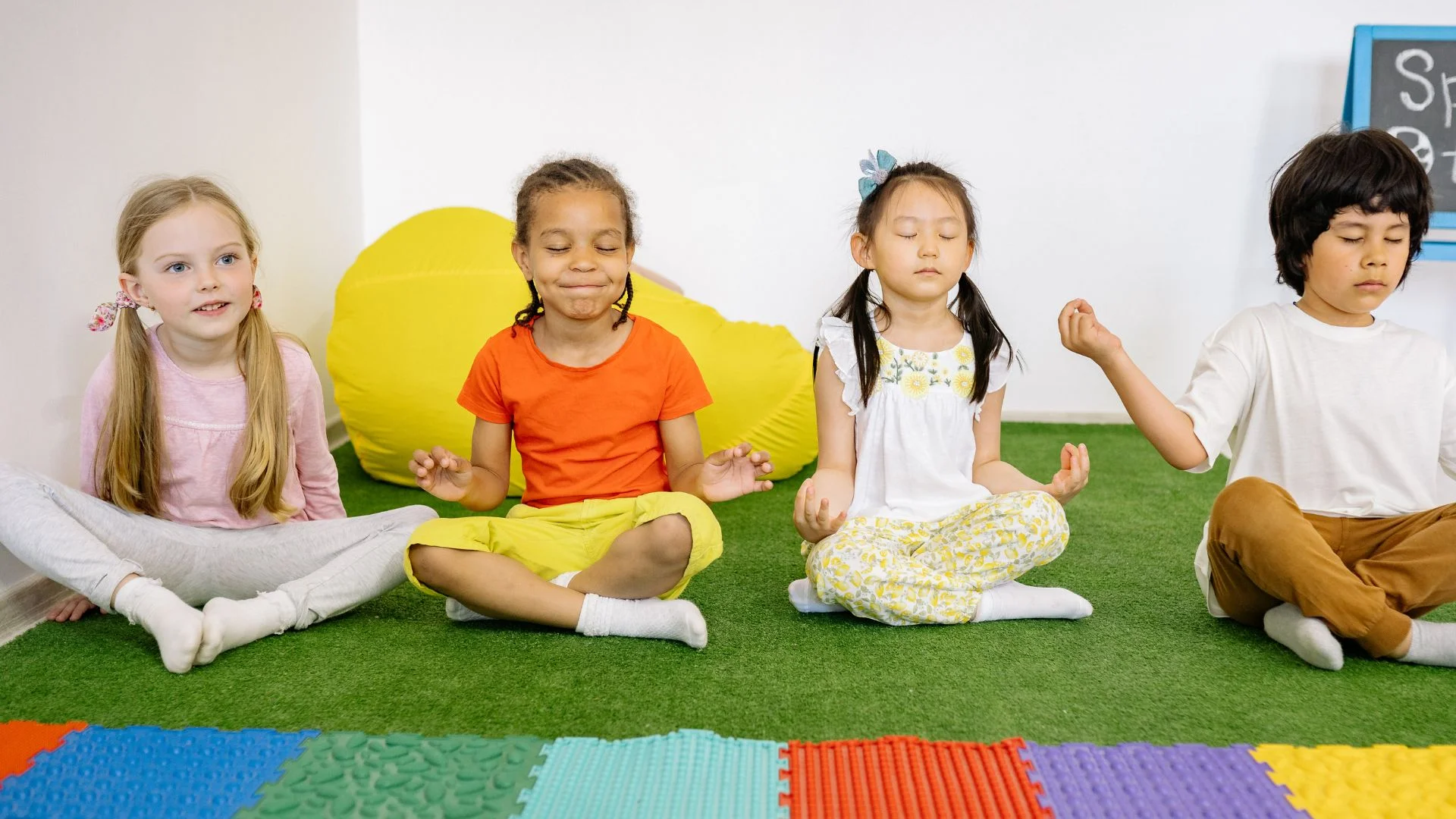
Teachers can provide students with options for activities and tasks during lunchtime to keep them engaged in a healthy, structured way. For example, Teachers could organise a short yoga session, a reading club or group games to help children use their energy in a positive way.
Running lunchtime clubs can also reduce hyperactivity and disruptive behaviour by giving children something purposeful and enjoyable to focus on. Making the transition to lunch smoother helps children return to the classroom ready to focus, learn and follow directions.
When a Teacher creates a calm, structured and supportive lunchtime break for students, it’s vital that they plan for the learning time that follows. Managing post-lunch energy is just as important as creating structure before and during lunchtime.
Many students come back after lunch excited and overstimulated, while others return frustrated and distracted, both of which can affect learning.
To keep the classroom calm and help students return to a learning mindset, it’s important for Teachers to establish a consistent routine. Giving students time to settle and transition gradually into lessons can help prevent them from becoming overwhelmed, overstimulated, or upset.
Returning to the classroom with a familiar or calming sensory activity helps students refocus and settle into learning. From there, Teachers can start the afternoon with consistent routines and clear visual cues to make the shift from break time to classwork smoother.
As a specialist education recruitment agency, we support mainstream and SEND schools with their temporary, permanent and temp-perm staffing needs.
We currently work with hundreds of schools and have exclusive access to some of the best Teachers and Teaching Assistants in the North West.
If you’re struggling to fill a teaching vacancy, why not get in touch with one of our team to see how we can help?
If you’re searching for your next teaching job, why not take a look at the latest teaching vacancies, or simply upload your CV to be notified when a relevant position becomes available.
Established in 2017, we’re an award winning and progressive recruitment agency based in the heart of the North West. Our reputation is built on trust, expertise and an unwavering commitment to exceed expectations.
In 2025, Spencer Clarke Group was awarded Best Public/Third Sector Recruitment Agency and Best Temporary Recruitment Agency at the Recruiter Awards. In 2024, Spencer Clarke Group was also named Recruitment Agency of the Year.